
Contents
2026 TREND GUIDE
By bedroomstylereviews
Feng shui — the ancient Chinese philosophical system for organising living and working spaces to promote the harmonious flow of energy (chi) — has experienced a significant resurgence in the Western interior design world in recent years. In 2026, its relevance is increasingly understood not just through its traditional metaphysical framework but through the lens of environmental psychology, which has independently validated many of feng shui’s core practical recommendations. Whether you approach it as an ancient wisdom tradition, a practical design philosophy, or both, the principles of bedroom feng shui offer genuinely useful guidance for creating a sleep environment that promotes wellbeing, reduces stress, and supports quality rest.
This guide covers the essential principles of bedroom feng shui for 2026 — from the fundamental concepts of chi and the Bagua map to specific, practical guidance on room arrangement, colour, and decluttering — with commentary on how these principles align with contemporary environmental psychology and sleep science.
❝ “Feng shui is, at its heart, an ancient design system for arranging space in ways that reduce unconscious stress and promote a feeling of safety and well-being. Modern environmental psychology has simply provided new vocabulary for the same observations.” — Interior Design Academic ❞

PART 1: THE FUNDAMENTALS OF FENG SHUI FOR BEDROOMS
Understanding Chi: Energy Flow in the Bedroom
Chi — also written as qi — is the fundamental concept underlying feng shui: the idea that living spaces have an energetic quality that is shaped by the arrangement of objects, the movement of air and light, the colours of surfaces, and the balance of yin and yang qualities within the space. In bedroom feng shui, the objective is to create a space with smooth, gentle, nourishing chi — promoting the yin (receptive, restful, inward) quality that supports sleep and restoration, while avoiding the sharp, fast-moving, disruptive chi (sha chi) that promotes wakefulness and anxiety.
From an environmental psychology perspective, the concept of chi maps remarkably well onto the psychological concept of restorative environments — spaces that reduce mental fatigue, promote psychological restoration, and create a sense of refuge and safety. The practical recommendations of feng shui for bedroom arrangement — removing clutter, avoiding sharp corners pointed at the bed, using soft materials and curves, eliminating work-related objects — align closely with the environmental psychology evidence for what creates genuinely restorative indoor environments.
The Commanding Position: Bed Placement
The commanding position is the single most foundational principle in bedroom feng shui: the bed should be placed in a position that allows the occupant to see the bedroom door while lying in bed, without being directly in line with the door. In practice, this means positioning the bed diagonally opposite the door — on the wall farthest from the door and to one side rather than directly facing it — so that the door is visible without being in the direct path of anyone entering through it.
The psychological logic behind the commanding position is intuitive: lying in a position where you cannot see the room’s entrance creates a subliminal sense of vulnerability that prevents the deep physiological relaxation that sleep requires. This is a genuine phenomenon documented in environmental psychology — the positioning of sleeping spaces relative to entrances affects perceived safety and physiological arousal levels even when there is no actual threat present. The commanding position eliminates this source of subliminal stress and creates the psychological safety that optimal sleep requires.
Bed Against a Solid Wall: The Importance of the Headboard
Feng shui consistently recommends that the head of the bed be positioned against a solid wall, with a substantial headboard providing additional support and protection behind the sleeper’s head. The wall behind the bed should be free of windows, doors, or openings. This principle aligns directly with the environmental psychology of perceived safety and physical security — a solid wall behind the sleeping position eliminates the vulnerability of having an exposed back and provides a psychological anchor that the lack of solid support cannot replicate.
Avoid Placing the Bed Under a Window
Feng shui recommends avoiding placement of the bed directly under a window — specifically the alignment of the sleeping body under a window opening, which is considered to create unstable chi (flowing over the sleeper) and reduced psychological security. The practical wisdom here is again environmentally sound: windows above the bed allow external light, sound, and temperature fluctuations to affect the sleeper more directly than a solid wall overhead would. A bed positioned under a window is also exposed to draughts in winter and direct morning light in summer — both of which can meaningfully disrupt sleep quality.
PART 2: FENG SHUI BEDROOM ARRANGEMENT PRINCIPLES
Symmetry and Balance Around the Bed
Feng shui places strong emphasis on symmetry and balance in the bedroom, particularly around the bed — advocating for matching or complementary elements on both sides, including bedside tables at equal heights, matching or paired lamps, and an equal amount of space on each side of the bed. This symmetry principle aligns with contemporary interior design’s understanding of visual balance — asymmetric bedroom arrangements can create a subtle but persistent sense of imbalance that is registered by the brain’s spatial processing systems and can contribute to subliminal unease.
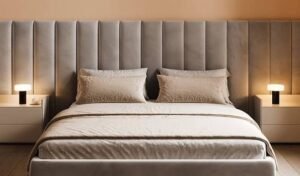
From a practical feng shui perspective, the symmetry of the bedroom also reflects the yin-yang balance concept — creating an environment that expresses equilibrium and complementarity rather than dominance or imbalance in one direction. For couples, the equal representation of both partners in the bedroom’s arrangement is considered particularly important — a room that reflects only one person’s taste and presence creates an energetic imbalance that feng shui associates with relationship strain.
The No-Work Zone: Eliminating Professional Energy
Feng shui is unequivocal on the subject of work in the bedroom: desks, computers, work documents, and professional materials of any kind bring activating, performance-associated energy into the sleep environment and should be removed from the bedroom entirely. This principle has gained significant additional support from 2026’s sleep science evidence base — research consistently demonstrates that the presence of work-related objects in the bedroom activates cognitive arousal even when not actively working, because the visual cues associated with work trigger the same psychological state as actual work preparation.
In practice, the increasing prevalence of home working has made the strict separation of work and sleep spaces more challenging for many people. Where a separate home office is not available, a dedicated physical boundary within a room — a bookshelf screen, a curtain, or even a rug that defines the sleeping area — has some evidence to support it as a compromise that partially protects the sleep space from work cue contamination.

Mirrors in the Bedroom: The Feng Shui Caution
Feng shui traditionally cautions against mirrors in the bedroom, particularly those positioned to reflect the bed, because mirrors activate and accelerate chi movement in a way that is disruptive to the restful yin quality the bedroom requires. Some traditions specifically associate bedroom mirrors with disturbed sleep, nightmares, and relationship difficulties. The modern environmental psychology perspective on bedroom mirrors is more nuanced: there is no research support for the supernatural mechanisms attributed to bedroom mirrors, but there is good evidence that visual stimulation, reflections of movement, and the experience of ‘seeing oneself’ in a bedroom mirror can create cognitive activation that interferes with sleep onset.
The practical 2026 recommendation is a compromise position: mirrors in the bedroom are acceptable when they are positioned so that they do not reflect the bed (cannot be seen by a person lying in the bed), and when they do not face windows in a way that bounces bright morning light onto the sleeping surface.

PART 3: FENG SHUI COLOUR AND MATERIAL GUIDANCE
Yin Colours for the Bedroom
Feng shui colour guidance for the bedroom centres on the concept of yin colours — the soft, muted, receptive colours associated with rest, introspection, and restoration, as opposed to yang colours that are activating, projective, and energising. The yin colour palette for the bedroom includes: soft blues and blue-greens, muted earthy tones (sage green, dusty terracotta, warm sand), cream and warm white, soft lavender, and pale rose. These recommendations align precisely with the colour psychology research on bedroom colours and sleep quality, which identifies the same palette as the most sleep-supportive colour choices.
The yang colours — bright reds, vivid oranges, sharp yellows, vivid purples — are generally considered unsuitable for bedroom walls in feng shui, as they activate chi energy in a way that is counterproductive to the bedroom’s primary function as a restorative environment. This does not mean these colours cannot appear anywhere in the bedroom — a single accent cushion or a decorative object in a warm red or orange can introduce vitality and warmth without overwhelming the space’s yin quality — but they should not dominate the colour scheme.
Natural Materials and Grounding Earth Elements
Feng shui’s five-element theory identifies wood, fire, earth, metal, and water as the fundamental elemental forces that need to be balanced within a living space. In the bedroom, the earth element — represented by natural materials such as stone, clay, terracotta, and soil-toned textiles — provides grounding, stability, and physical security. The wood element — natural wood furniture, green plants, botanical patterns — brings growth, flexibility, and vitality. In 2026, the bedroom design trend toward natural materials, earth tones, biophilic elements, and organic forms aligns precisely with feng shui’s emphasis on the earth and wood elements in the bedroom.
Decluttering as a Feng Shui Practice
Clutter, in feng shui, is understood as stagnant chi — energy that has accumulated without moving, creating blockages that impede the flow of nourishing energy through the space. The relationship between physical clutter and psychological well-being is also extensively documented in the environmental psychology literature, which demonstrates that cluttered environments are associated with elevated cortisol (stress hormone) levels, reduced cognitive focus, and impaired ability to emotionally regulate — all of which directly impair sleep quality.
In 2026, the convergence of feng shui philosophy and psychological evidence makes bedroom decluttering one of the most clearly justified and most impactful bedroom environment interventions available. The specific feng shui guidance — clear under-bed storage (accumulated objects under the bed are thought to disrupt chi during sleep), remove objects that represent the past rather than the present, maintain clear pathways to the bed on both sides — provides useful practical specificity to the general environmental psychology recommendation to reduce visual complexity in the sleep environment.
PART 4: PRACTICAL FENG SHUI BEDROOM CHECKLIST FOR 2026
- Place the bed in the commanding position — able to see the door, not directly in line with it, against a solid wall.
- Ensure matching or balanced elements on both sides of the bed — symmetry promotes energetic balance.
- Remove all work-related objects from the bedroom entirely — separate professional energy from sleep space.
- Clear clutter from under the bed — use only designated, contained storage if under-bed space is used at all.
- Position any bedroom mirrors so they do not reflect the sleeping occupant.
- Introduce at least one living plant as the wood element — for growth, oxygen, and vital chi.
- Choose muted, yin-quality colours for walls and dominant textiles — soft blues, sage, earthy neutrals.
- Remove all electronic devices not necessary for sleep from the bedroom — screens, work computers, and devices bring yang, activating chi into the yin space.
- Introduce natural materials — wood, stone, cotton, wool, linen — as the dominant material expression.
- Maintain clear pathways to the bed on both sides — unobstructed access reflects positive chi flow and practical safety.
© 2026 bedroomstylereviews.com — All Rights Reserved
Affiliate Disclosure: We earn commission from qualifying Amazon purchases. All opinions are our own.

Dan is the founder and head content creator at Bedroom Style Reviews.
He has been working as a professional online product reviewer since 2015 and was inspired to start this website when he ended up sleeping on a memory foam mattress that was too soft and gave him backache.
Through in-depth research and analysis, Dan’s goal with this website is to help others avoid such pitfalls by creating the best online resource for helping you find your ideal mattress, bedding, and bedroom furniture.
Dan is a qualified NVQ Level 2 Fitness Instructor with 6 years’ experience helping clients improve their health through diet, exercise, and proper sleep hygiene.
He also holds several college and university-level qualifications in health sciences, psychology, mathematics, art, and digital media creation – which helps him to publish well researched and informative product reviews as well as articles on sleep, health, wellbeing, and home decor.
Dan also has direct personal experience with insomnia, anxiety, misophonia (hypersensitivity to sounds), and pain from both acute and long-standing sporting injuries – he enjoys writing insightful articles around these subjects to help fellow sufferers of such conditions.
Learn more about Dan here.