
Contents
2026 TREND GUIDE
By Bedroom Style Reviews Editorial Team
Sleep hygiene — the collection of behavioural and environmental practices that support consistent, restorative sleep — has transitioned from a niche clinical concept to mainstream health knowledge in recent years, and in 2026, it is understood to be as fundamental to overall health as nutrition and exercise. The research base supporting specific sleep hygiene practices has grown substantially, and the practical guidance available in 2026 is significantly more evidence-grounded and individually nuanced than the generic advice of previous decades.
This comprehensive guide covers the complete science of sleep hygiene in 2026 — from the underlying biology of sleep and circadian rhythm to the ten most evidence-supported sleep hygiene practices, the most common sleep disruptors and how to address them, and the most promising innovations in sleep science that are informing new approaches to sleep quality improvement.
❝ “Sleep hygiene is not about following a rigid list of rules. It is about understanding the biology of your own sleep system well enough to work with it rather than against it.” — Clinical Sleep Specialist ❞

PART 1: THE BIOLOGY OF SLEEP — UNDERSTANDING WHAT YOU ARE WORKING WITH
The Two-Process Model of Sleep Regulation
Sleep is not simply the absence of waking consciousness — it is an actively regulated physiological state governed by two distinct biological processes that interact continuously throughout the 24-hour day. Understanding these processes is the foundation of genuinely effective sleep hygiene.
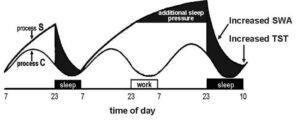
Process S, or sleep pressure, refers to the accumulation of adenosine — a chemical by-product of neural activity — in the brain throughout the waking hours. Adenosine builds continuously from the moment of waking, creating a progressively increasing drive toward sleep. This is what creates the feeling of tiredness that increases throughout the day, and that is temporarily relieved by caffeine (which blocks adenosine receptors without eliminating the accumulated adenosine). Process C, or circadian drive, refers to the influence of the internal biological clock — the suprachiasmatic nucleus — which oscillates across the 24-hour day in synchrony with the light-dark cycle, promoting wakefulness during the day and sleep at night through the modulation of dozens of physiological variables, including core body temperature, cortisol, melatonin, and dozens of other hormones.
Quality sleep occurs most readily when Process S (sleep pressure) and Process C (circadian drive to sleep) are both aligned — that is, when there is both significant accumulated sleep pressure and a strong circadian drive toward sleep. Sleep hygiene practices are, at their core, practices that protect and optimise both processes.
Sleep Architecture: The Structure of a Night’s Sleep
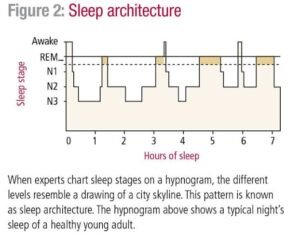
A healthy night’s sleep in an adult is not a uniform state but a series of 4-6 ultradian cycles, each lasting approximately 90 minutes, through which the sleeper progresses from lighter sleep (N1 and N2) to deep, slow-wave sleep (N3) and then into REM (rapid eye movement) sleep. The composition of these cycles changes across the night: the early sleep cycles contain more deep, slow-wave sleep (which is primarily associated with physical restoration, immune function, and declarative memory consolidation), while later cycles contain progressively more REM sleep (associated with emotional regulation, creativity, procedural memory, and dream activity).
This architecture has important practical implications for sleep hygiene. Disruptions to sleep in the first half of the night disproportionately damage deep sleep; disruptions in the second half disproportionately damage REM sleep. Alcohol, which suppresses REM sleep, therefore primarily damages the emotionally and cognitively restorative function of sleep, even if it does not noticeably disrupt the early deep sleep stages. An irregular sleep schedule that truncates the later sleep cycles (early forced wake times) disproportionately reduces REM sleep relative to deep sleep.
PART 2: THE TEN EVIDENCE-BASED SLEEP HYGIENE RULES FOR 2026
Rule 1: Maintain a Consistent Sleep-Wake Schedule, Including Weekends
The most robustly evidenced sleep hygiene recommendation — and the one most consistently cited by sleep researchers — is the maintenance of a fixed wake time, seven days a week, regardless of the previous night’s sleep quality or quantity. This consistency acts as the primary zeitgeber (time-giver) for the circadian clock, keeping it precisely calibrated to a 24-hour cycle and ensuring that sleep onset and wake time become increasingly automatic and reliable over time.
The common weekend lie-in — sleeping one to three hours later than the weekday wake time — disrupts the circadian alignment achieved during the week, effectively creating weekly mini-jet lag. The Monday morning grogginess and difficulty waking that many people experience is a predictable consequence of this circadian disruption rather than an intrinsic feature of Monday mornings. Maintaining a consistent wake time (even if bedtime occasionally varies) is the single most impactful behavioural sleep hygiene practice.
Rule 2: Use the Bed Only for Sleep and Sex
Stimulus control therapy — the practice of restricting the bed to sleep and intimacy, excluding all other waking activities — is one of the most robustly evidenced non-pharmaceutical treatments for insomnia. The principle is based on classical conditioning: if the bed is used for work, screen use, eating, or extended waking worry, the bed ceases to be a powerful stimulus for sleep and instead becomes a stimulus for waking activity. Conversely, if the bed is reserved exclusively for sleep, the brain learns to associate horizontal position in the dark bedroom with sleep onset, making the transition from waking to sleep increasingly automatic.
❝ “Your bed should be a conditioned stimulus for sleep — a place that your brain associates so strongly with sleeping that lying in it automatically initiates sleep onset. Every non-sleep activity you perform in bed weakens this conditioning.” — Clinical Psychologist, Sleep Medicine. ❞
Rule 3: Create a 90-Minute Pre-Sleep Wind-Down Period
The autonomic nervous system cannot transition abruptly from full sympathetic activation (the ‘fight or flight’ state that daytime productivity, screen use, and stress maintain) to the parasympathetic dominance that quality sleep requires. A structured transition period — gradually stepping down from stimulation and activating the parasympathetic system — is physiologically necessary for reliable, smooth sleep onset.
The optimal 90-minute wind-down in 2026 begins with transitioning from bright, blue-spectrum light to dim, warm-toned lighting, and from stimulating screen content to calming, non-demanding activity. The final 30 minutes should involve a specific relaxation practice — progressive muscle relaxation, a body scan meditation, diaphragmatic breathing, or reading fiction — that actively supports the physiological transition to sleep. Consistency of the wind-down routine is as important as its specific content: a consistent sequence of activities before bed becomes, over time, a powerful conditioned pre-sleep cue that accelerates sleep onset.
Rule 4: Manage Light Exposure Strategically
Light is the primary zeitgeber for the human circadian clock — the most powerful external signal the brain uses to calibrate the timing of the sleep-wake cycle. Morning bright light exposure (ideally 10,000 lux of natural outdoor light or equivalent SAD lamp light) within 30-60 minutes of waking suppresses the tail end of nocturnal melatonin production, sends a potent ‘day has started’ signal to the circadian clock, and initiates a neurobiological timer that will generate sleep drive approximately 14-16 hours later.
Evening light management is equally important. The progressive reduction of environmental light intensity and the shift from cool to warm colour temperatures in the evening mimics the natural light environment under which human sleep evolved — the blue-rich light of midday transitioning to the warm, red-toned light of sunset and firelight. Smart bulbs that automate this transition, or the simple habit of switching from overhead lighting to warm bedside lamps after 8 p.m., meaningfully reduce evening circadian disruption.
Rule 5: Manage Caffeine Cutoff Times
Caffeine’s half-life in the human body is approximately 5-6 hours in normal metabolisers, but this average masks significant individual variation. Approximately 10% of people are ‘fast metabolisers’ who clear caffeine much more quickly; the same proportion are ‘slow metabolisers’ in whom caffeine remains active for 8-10 hours or more. Genetic testing for CYP1A2 polymorphisms, available through several consumer genetics services in 2026, can identify which category you fall into and allow you to calibrate your caffeine cutoff time more precisely.
Rule 6: Optimise Sleep Environment Temperature
Core body temperature drops by approximately 1-2°F (0.5-1°C) as part of the normal sleep initiation process, and an ambient temperature that supports this drop — typically 60-67°F (15-19°C) in the bedroom — meaningfully supports sleep onset and sleep quality maintenance throughout the night. This is the most physiology-grounded bedroom environment specification available, and its neglect is one of the most common and most readily correctable causes of sleep quality problems.
Rules 7-10: Summary of Additional Evidence-Based Practices
- Rule 7: Exercise regularly, but not within 2-3 hours of bedtime: Aerobic exercise significantly improves sleep quality and duration over time. The timing caveat is important for those sensitive to exercise-induced cortisol and temperature elevation.
- Rule 8: Manage alcohol consumption: Alcohol’s short-term sedating effect masks its significant disruption of REM sleep and sleep continuity in the second half of the night. No alcohol within three hours of bedtime is the minimum evidence-based guidance.
- Rule 9: Address sleep anxiety directly: Sleep anxiety — worry about not sleeping — is a significant and often self-reinforcing cause of insomnia. Cognitive behavioural therapy for insomnia (CBT-I) is the gold standard treatment and is more effective than sleep medication in long-term outcomes.
- Rule 10: Address bedroom noise: Unpredictable noise — a partner’s snoring, traffic, neighbours — is one of the most damaging and least addressed sleep disruptors. Earplugs, white noise generation, and acoustic improvements to the bedroom are all evidence-based interventions.
PART 3: COMMON SLEEP DISRUPTORS AND HOW TO ADDRESS THEM IN 2026
Snoring and Sleep Apnoea
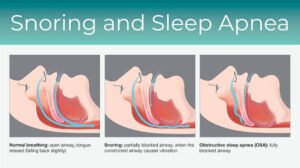
Snoring — the vibration of upper airway tissue during sleep — affects approximately 40% of adults and is a significant source of sleep disruption for both the snorer and their partner. Simple positional interventions (sleeping on the side rather than the back reduces snoring in most people; a body pillow can maintain the side position throughout the night) are the first line of approach. For suspected obstructive sleep apnoea — characterised by witnessed breathing pauses, gasping, significant daytime sleepiness, and morning headaches — medical investigation is essential. Untreated sleep apnoea is associated with significantly elevated cardiovascular disease risk.
Restless Legs Syndrome
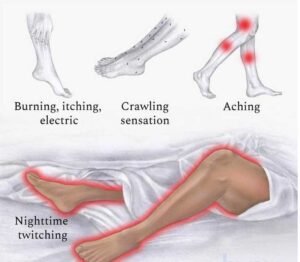
Restless legs syndrome (RLS) — characterised by an irresistible urge to move the legs, typically worsening in the evening and disrupting sleep onset — affects approximately 10% of adults. Iron deficiency is among the most common and most readily correctable causes, and a serum ferritin test is warranted in anyone presenting with RLS symptoms. Other contributing factors include magnesium deficiency, caffeine, alcohol, antihistamine use, and some antidepressant medications.
Digital Device Use and the Pre-Sleep Routine
The 202evidence-baseded on pre-sleep device use is more nuanced than the simple ‘no screens before bed’ guidance of earlier years. The sleep-disrupting effects of evening screen use appear to be attributable primarily to three factors: the circadian impact of the blue-spectrum light emitted; the cognitive and emotional stimulation of the content consumed; and the time displacement effect — the tendency for screen use to delay bedtime through excessive engagement. Blue-light filters and night mode settings on devices address only the first factor; the second and third require content and usage habit management rather than technological solutions.

© 2026 bedroomstylereviews.com — All Rights Reserved
Affiliate Disclosure: We earn commission from qualifying Amazon purchases. All opinions are our own.

Dan is the founder and head content creator at Bedroom Style Reviews.
He has been working as a professional online product reviewer since 2015 and was inspired to start this website when he ended up sleeping on a memory foam mattress that was too soft and gave him backache.
Through in-depth research and analysis, Dan’s goal with this website is to help others avoid such pitfalls by creating the best online resource for helping you find your ideal mattress, bedding, and bedroom furniture.
Dan is a qualified NVQ Level 2 Fitness Instructor with 6 years’ experience helping clients improve their health through diet, exercise, and proper sleep hygiene.
He also holds several college and university-level qualifications in health sciences, psychology, mathematics, art, and digital media creation – which helps him to publish well researched and informative product reviews as well as articles on sleep, health, wellbeing, and home decor.
Dan also has direct personal experience with insomnia, anxiety, misophonia (hypersensitivity to sounds), and pain from both acute and long-standing sporting injuries – he enjoys writing insightful articles around these subjects to help fellow sufferers of such conditions.
Learn more about Dan here.