
Contents
2026 TREND GUIDE
By Bedroom Style Reviews Editorial Team
A small bedroom presents one of interior design’s most satisfying challenges: creating a space that feels genuinely comfortable, beautiful, and functional within a constrained footprint. The difference between a small bedroom that feels cramped and one that feels cosy and intentionally designed often comes down to a small number of strategic decisions — in furniture scale, colour, light, storage, and layout — that can be implemented at any budget level.
In 2026, the design world’s growing interest in compact living, influenced by urban space constraints, sustainability considerations, and the Japanese philosophy of wabi-sabi, has produced an extraordinary wealth of genuinely useful guidance on making small spaces feel generously proportioned. This guide consolidates the twenty most impactful and practically achievable ideas into a single comprehensive resource.
❝ “Small bedrooms are not a design problem to be solved. They are a design constraint that, embraced intelligently, often produces the most intimate, considered, and genuinely beautiful bedrooms of all.” ❞
SECTION 1: FURNITURE STRATEGIES FOR SMALL BEDROOMS
1. Choose a Platform Bed with Integrated Storage
In a small bedroom, the bed is by far the most space-hungry furniture piece — and maximising its utility is the single most impactful space efficiency decision available. A platform bed with hydraulic-lift storage beneath the mattress can provide the equivalent of an entire wardrobe’s worth of storage capacity within the bed’s existing footprint, with zero additional floor space required. In a small bedroom, this can genuinely eliminate the need for a separate chest of drawers — freeing up several square metres of floor space for other uses.

When choosing a storage bed for a small room, prioritise the lift mechanism quality — a smooth, counterbalanced hydraulic system should be able to lift even a heavy mattress with one hand and hold it securely open while you access the storage. Avoid gas-lift mechanisms that degrade quickly under the weight of heavy mattresses. And ensure the mattress height combined with the bed’s storage height does not create a bed that is disproportionately tall for the room’s ceiling height.
2. Float Your Furniture Away from Walls
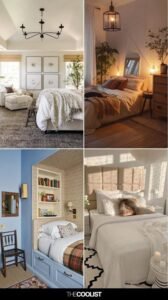
Counter-intuitively, one of the most effective strategies for making a small bedroom feel larger is to move furniture slightly away from the walls rather than pushing it against them. This creates a visual separation between the furniture and the walls that suggests spaciousness and prevents the room from feeling completely packed. Pulling the bed six inches away from the wall (or using a floating bed frame mounted to the wall) allows light and air to circulate behind it, and creates a hotel-like quality that reads as intentional and spacious.
3. Use Wall-Mounted Nightstands
In a small bedroom, every centimetre of floor space is valuable. Wall-mounted floating nightstands — shelves or small platforms attached directly to the wall at the correct height — eliminate the footprint of freestanding nightstands entirely while providing all the functional benefits. In 2026, wall-mounted nightstand designs have become significantly more sophisticated, with integrated USB charging ports, adjustable heights, and materials ranging from natural oak to marble to powder-coated steel.
4. Choose Multi-Functional Furniture Throughout
The single most important furniture principle for bedrooms in 2026 is the elimination of single-function pieces. Every item of furniture should serve at least two purposes: a bench at the foot of the bed should contain storage. A mirror should be full-length to serve the practical function of dressing while amplifying light. A bedside table should include drawer storage. A wardrobe should incorporate a built-in hanging mirror. When every piece works harder, the room requires fewer pieces, and fewer pieces means more space.
SECTION 2: COLOUR AND LIGHT STRATEGIES
5. The Counter-Intuitive Case for Dark Colours in Small Rooms
The conventional wisdom that small rooms should always be painted in light, pale colours to maximise their perceived size is an over-simplification that misses an important design principle. While very light colours do create a sense of airy meanousness, they also eliminate contrast and definition — making a small room feel flat and visually uninteresting rather than cosy and intentional. In 2026, an increasing number of interior designers are advocating for deep, rich colours in small bedrooms — forest green, midnight blue, charcoal, deep terracotta — on the grounds that they create an enveloping, intimate, deliberate atmosphere that transforms a small room from inadequate to cosy by design.
The key to making deep colours work in a small bedroom is strategic light management: more light sources, not fewer; mirrors positioned to amplify natural light; and a deliberately warm, low-level lighting scheme that creates a warm, cozy feeling rather than attempting to replicate the brightness of a larger room.
PRO TIP: Paint the ceiling the same colour as the walls in a small bedroom — it eliminates the visual interruption at the ceiling line and creates an enveloping effect that makes the room feel more like a defined, intentional space.
6. Use Mirrors Strategically
A well-placed mirror is the small bedroom’s most powerful optical illusion tool, capable of doubling the perceived size of a space when used correctly. Full-length mirrors positioned on or opposite windows amplify and bounce natural light throughout the room. A large mirror on the wall opposite the bed’s headboard creates the impression of a room that extends beyond the wall. In 2026, antiqued mirror panels used as wardrobe door inserts or as a feature wall element behind bedside tables are particularly popular for their ability to expand space visually while adding a warm, characterful aesthetic quality.
7. Vertical Lines and Height Emphasis
Drawing the eye upward — through the use of vertical stripes, tall narrow furniture, floor-to-ceiling curtains hung high above the window frame, and vertical architectural features such as beadboard or narrow shiplap panelling — creates a powerful illusion of height and spaciousness in a small bedroom. In 2026, floor-to-ceiling linen curtains hung from a ceiling-mounted track (positioned as high as possible, ideally touching the ceiling) are one of the most commonly cited transformative upgrades for small bedrooms, adding dramatic visual height to rooms with standard ceiling heights.
8. Monochromatic Colour Schemes
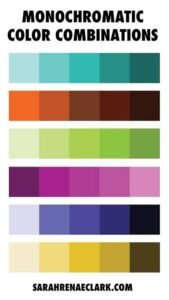
Using a single colour family throughout a small bedroom — walls, bedding, curtains, and furniture all in related tones of the same hue — creates a visual cohesion that makes the room’s boundaries less apparent and the overall space feel more generous. In 2026, monochromatic bedrooms in warm sand, earthy terracotta, or soft sage green are among the most popular design approaches for small spaces, combining the expansive visual effect of a unified palette with the warmth and character of the current earth-tone aesthetic.
SECTION 3: STORAGE SOLUTIONS FOR SMALL BEDROOMS
9. Under-Bed Storage Done Right
Under-bed storage is a storage resource available to virtually every bedroom regardless of its floor plan, and in a small bedroom it can represent a significant proportion of the room’s total storage capacity. In 2026, the best under-bed storage solutions have moved beyond basic plastic boxes to include: rolling drawers with soft-close mechanisms that integrate with the bed frame’s aesthetic; vacuum storage bags for seasonal bedding, and clothing that compresses to a fraction of their nor, mal volume; and wooden crates or rattan baskets that provide attractive open storage for items that are accessed more regularly.
10. Built-In Alcove Shelving
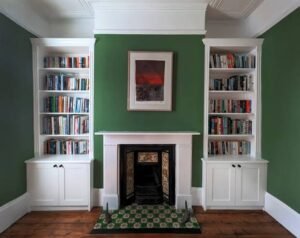
If your small bedroom has a chimney breast, a recessed niche, or any architectural recess in its walls, building bespoke shelving into these alcoves uses space that would otherwise be dead area. Alcove shelving at nightstand height on either side of the bed creates the functional and aesthetic benefits of bedside tables with zero footprint impact — the shelves are recessed into the wall rather than projecting into the room. Above the bed, deep shelving in a recessed niche can provide significant book and object storage while adding a beautiful, fully framed quality to the headboard wall.
11. The Capsule Wardrobe as a Space Strategy
The single most effective storage strategy for a small bedroom is not cleverer furniture but a smaller wardrobe — the capsule wardrobe philosophy of owning fewer, better-chosen items reduces the total storage required and can meaningfully change what furniture you need. A wardrobe containing 80-100 carefully chosen garments requires dramatically less storage space than one containing 200-300 items accumulated over years. If reducing your wardrobe is not appealing, at minimum an annual decluttering session can prevent the storage creep that forces larger and larger wardrobes into increasingly space-poor bedrooms.

SECTION 4: LAYOUT AND DESIGN PRINCIPLES
12-20: Quick-Win Small Bedroom Improvements
- Mount your TV on the wall: Eliminating a TV stand frees significant floor space and creates a cleaner aesthetic.
- Use clear or glaaglassn,iture pieces: Acrylic, glass, or lucite furniture pieces allow light to pass through them, reducing their visual weight and making the room feel less occupied.
- Keep the floor visible: The more floor you can see, the larger the room appears. Beds with legs allow the floor to be seen beneath them, creating a visual spaciousness that platform beds on the floor cannot.
- Choose one large rug rather than multiple small ones: A single large rug that extends under the bed creates unity and apparent spaciousness; multiple small rugs create visual fragmentation that makes a small room feel chaotic.
- Remove the clutter from flat surfaces: Every horizontal surface in a small room should contain either nothing or a very deliberate, minimal arrangement. Clutter on surfaces is visually overwhelming in a small space.
- Use adjustable lighting rather than a single ceiling light: Multiple warm light sources at different levels create depth and atmosphere that makes a small room feel more dimensional.
- Hang artwork at the correct height: Art hung too high or too low disrupts the visual flow. The centre of artwork should be at eye level — approximately 145cm from the floor for most people.
- Use curtains, not blinds, for height: Floor-to-ceiling curtains, even on small windows, dramatically increase the perception of cmakeg height and room scale.
- Keep the colour palette tight: Limit to two or three colours in a small bedroom. More colours create visual fragmentation that makes a small space feel busy and chaotic.
© 2026 bedroomstylereviews.com — All Rights Reserved
Affiliate Disclosure: We earn commission from qualifying Amazon purchases. All opinions are our own.

Dan is the founder and head content creator at Bedroom Style Reviews.
He has been working as a professional online product reviewer since 2015 and was inspired to start this website when he ended up sleeping on a memory foam mattress that was too soft and gave him backache.
Through in-depth research and analysis, Dan’s goal with this website is to help others avoid such pitfalls by creating the best online resource for helping you find your ideal mattress, bedding, and bedroom furniture.
Dan is a qualified NVQ Level 2 Fitness Instructor with 6 years’ experience helping clients improve their health through diet, exercise, and proper sleep hygiene.
He also holds several college and university-level qualifications in health sciences, psychology, mathematics, art, and digital media creation – which helps him to publish well researched and informative product reviews as well as articles on sleep, health, wellbeing, and home decor.
Dan also has direct personal experience with insomnia, anxiety, misophonia (hypersensitivity to sounds), and pain from both acute and long-standing sporting injuries – he enjoys writing insightful articles around these subjects to help fellow sufferers of such conditions.
Learn more about Dan here.