
Contents
2026 TREND GUIDE
The bed sheet is the layer of bedding that has the most direct, continuous contact with your skin during sleep — typically eight to ten hours every night. Given this intimate, sustained contact, the quality, breathability, texture, and temperature-regulating properties of your sheets have a direct and measurable impact on your sleep comfort and quality. In 2026, the bed sheet market offers more material variety, more transparency around production credentials, and more genuine innovation in fabric technology than at any previous point — making it both an exciting and potentially overwhelming category to navigate.
This guide cuts through the marketing noise to give you the evidence-based information you need to choose the best sheets for your sleep type, aesthetic preferences, and budget, with clear guidance on which specifications actually matter and which are marketing fiction.
❝ “Thread count is one of the most effective pieces of misdirection in the entire bedding industry. A 300 thread count in long-staple Egyptian cotton will sleep better than a 1,000 thread count in short-staple percale. Focus on fibre quality, not count.” — Bedding Industry Insider. ❞
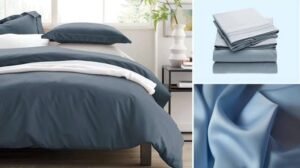
PART 1: BED SHEET MATERIALS COMPARED
Linen: The 2026 Gold Standard
Linen bedding has completed its transition from a premium niche choice to the mainstream gold standard of quality sleep in 2026. Made from the fibres of the flax plant (Linum usitatissimum), linen possesses a combination of properties that no other natural fabric replicates: exceptional thermoregulation (keeping sleepers cool in warm weather and warm in cool weather), high breathability and moisture absorption, natural antimicrobial properties, and a durability that means quality linen sheets improve rather than deteriorate with washing.
The linen sleep experience is distinctive: slightly textured and almost scratchy when new, it softens over successive washes into a supple, smooth fabric with an unmatched lived-in quality. The softening process typically takes five to ten washes to complete meaningfully, which means the best linen sheets you own will be the ones you have had the longest. Linen is also one of the most sustainable natural fibres available — flax grows with minimal water and pesticide requirements compared to conventional cotton.
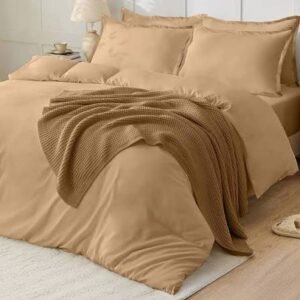
- Best for: Hot sleepers, warm climates, year-round temperature regulation, sustainable choice.
- Thread count equivalent: 80-180 threads per 10cm² (linen uses a different quality metric — weight, measured in gsm, is more reliable: 160-200 gsm for year-round use).
- Price range: £60-£180 for a quality king-size flat sheet.
Egyptian and Long-Staple Cotton: The Softness Standard
Egyptian cotton — specifically cotton grown in the Nile River Delta and made from extra-long-staple fibres — has long been positioned as the premium standard of cotton sheet quality, and when genuine (unblended, certified) Egyptian cotton is used, this reputation is earned. Extra-long staple fibres produce a smoother, softer, more durable yarn than shorter-staple cotton varieties, as there are fewer fibre ends to create surface roughness or pill over time.
The important caveat in 2026 is that Egyptian cotton labelling is widely misused. The Cotton Egypt Association estimates that globally, sheets sold as Egyptian cotton contain, on average, only 30% actual Egyptian cotton — the remainder being blended with shorter-staple varieties to reduce cost. Always look for a certification from the Cotton Egypt Association or equivalent credentialing body, and be appropriately sceptical of Egyptian cotton claims at lower price points.
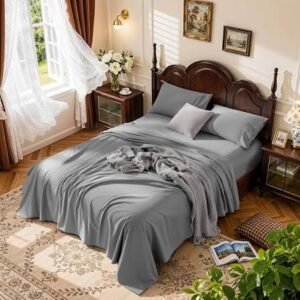
Bamboo Fabric: The Sustainable Innovator
Bamboo-derived bed sheets — typically produced as bamboo viscose, bamboo lyocell (Tencel), or bamboo modal — have grown from a novelty to a significant market category in 2026, driven by their exceptional softness, impressive thermoregulating properties, and sustainability credentials. Bamboo is one of the world’s fastest-growing plants, requiring no fertiliser, minimal water, and naturally resistant to pests — making it a genuinely more sustainable raw material than conventional cotton.
The sleep experience on bamboo sheets is often described as silky-smooth and cool — bamboo fibres have a natural structure that wicks moisture effectively and feels pleasantly cool against the skin. Hot sleepers who find linen’s texture too rough often prefer bamboo as their best thermoregulating alternative. The sustainability credentials, however, depend significantly on the manufacturing process — bamboo viscose production uses chemical processes that can be environmentally problematic, while bamboo lyocell (Tencel) is produced in a closed-loop process that is genuinely more sustainable.
★ Bamboo lyocell sheets are 3x more absorbent and 40% more breathable than conventional cotton sheets in standardised fabric performance testing (Textile Research Journal, 2025).
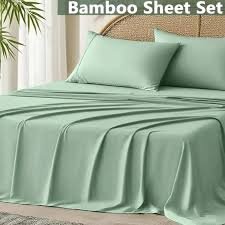
Percale Cotton: The Crisp Choice
Percale weave cotton — characterised by a one-over, one-under weave structure that produces a matte, crisp, flat surface — is the choice for those who prefer a cool, smooth, hotel-like sleep surface over the softer, more draping quality of sateen weave. A 200-400 thread count percale in quality long-staple cotton is one of the most durable, breathable, and laundry-resilient sheet options available in 2026. Its crisp texture does not suit everyone, but those who love percale tend to be exceptionally loyal to it.
Sateen Cotton: The Luxury Alternative
Sateen weave cotton — woven with a four-over, one-under structure that brings more thread to the surface — produces the characteristic lustrous, silky appearance and feel that is associated with luxury hotel bedding. Higher thread counts work particularly well in sateen weave. Sateen is softer and more draping than percale but slightly less breathable and more prone to pilling over time. It is the choice for those who prioritise tactile softness and a luxurious visual appearance over the crisp, temperature-neutral qualities of percale.
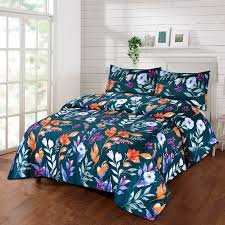
PART 2: THE THREAD COUNT MYTH AND WHAT ACTUALLY MATTERS
Why Thread Count Is Largely a Marketing Fiction
Thread count — the number of horizontal and vertical threads woven into one square inch of fabric — is the most widely cited and most thoroughly misleading quality indicator in the bedding industry. The myth of the higher-thread-count-equals-higher-quality sheet has been comprehensively debunked by textile research, yet marketing departments continue to use it because it provides a simple, easily compared number that consumers respond to.
The reality is more nuanced: thread count is only meaningful within a specific fibre type and weave. A 400 thread count in genuine long-staple Egyptian cotton percale represents an excellent quality sheet. A 1,000 thread count achieved by weaving plied yarns (twisted multiple fibres counted as multiple threads) may represent inferior quality cotton that pills quickly and feels rough. The most useful quality indicators for bed sheets in 2026 are: fibre type and staple length (long-staple always better), weave structure (percale for crispness, sateen for softness), fibre certifications (OEKO-TEX, GOTS), and GSM (grams per square metre) weight rather than thread count.
PRO TIP: In a cotton sheet, a thread count between 200-400 in a single-ply, long-staple construction is almost always better than a 600-1000 count in a multi-ply construction. When in doubt, ask the brand about their fibre source and staple length.
PART 3: THE COMPLETE SHEET BUYING CHECKLIST 2026
Questions to Ask Before You Buy
- What is the fibre source? Long-staple Egyptian, Pima, or Supima cotton? European or Belgian flax linen? Bamboo lyocell rather than bamboo viscose?
- What are the certifications? OEKO-TEX Standard 100 ensures no harmful chemicals. GOTS certification ensures organic production. Cotton Egypt Association certification validates Egyptian cotton.
- What is the fabric weight (gsm)? For linen: 160-200 gsm for year-round use. For cotton: 120-140 gsm for summer, 160-200 gsm for year-round.
- What is the return and exchange policy? Sheet feel is highly subjective — a trial period is ideal.
- What is the care requirement? Machine washable at 40°C or higher? Tumble dry safe? Some premium linens require specific care that may not suit every household’s laundry routine.
- Does the brand offer a complete set (fitted sheet, flat sheet, and pillowcases) with consistent dye lots?
PART 4: SHEET CARE FOR LONGEVITY
How to Make Quality Sheets Last
Quality bed sheets, properly cared for, should last five to ten years or more. The most common causes of premature sheet deterioration are preventable: washing at excessively high temperatures that weaken fibre structure; over-drying in a tumble dryer that creates mechanical stress; using too much detergent that leaves mineral residue that scratches fibres; and using fabric softener on linen (which actually coats the fibres and reduces their natural breathability and softening potential).
- Wash temperature: Most quality sheets should be washed at 40°C. Only wash at 60°C if there is a specific hygiene requirement (illness, allergy).
- Detergent quantity: Use half the recommended quantity of a gentle, fragrance-free detergent. More is not better — excess detergent is not fully rinsed and builds up over time.
- Drying: Line drying in open air is best for both longevity and environmental impact. If tumble drying, use a low heat setting and remove while still slightly damp to prevent over-drying.
- Storage: Store clean sheets in a cool, dry, dark space. Storing in a breathable cotton bag prevents the yellowing that plastic bags can cause.
- Rotation: Rotate between at least two sets of sheets to allow each set adequate recovery time and extend the lifespan of both.
© 2026 bedroomstylereviews.com — All Rights Reserved
Affiliate Disclosure: We earn commission from qualifying Amazon purchases. All opinions are our own.

Dan is the founder and head content creator at Bedroom Style Reviews.
He has been working as a professional online product reviewer since 2015 and was inspired to start this website when he ended up sleeping on a memory foam mattress that was too soft and gave him backache.
Through in-depth research and analysis, Dan’s goal with this website is to help others avoid such pitfalls by creating the best online resource for helping you find your ideal mattress, bedding, and bedroom furniture.
Dan is a qualified NVQ Level 2 Fitness Instructor with 6 years’ experience helping clients improve their health through diet, exercise, and proper sleep hygiene.
He also holds several college and university-level qualifications in health sciences, psychology, mathematics, art, and digital media creation – which helps him to publish well researched and informative product reviews as well as articles on sleep, health, wellbeing, and home decor.
Dan also has direct personal experience with insomnia, anxiety, misophonia (hypersensitivity to sounds), and pain from both acute and long-standing sporting injuries – he enjoys writing insightful articles around these subjects to help fellow sufferers of such conditions.
Learn more about Dan here.
Good day everyone, I wanted to share my thoughts on 125Win after spending considerable time with the platform. The design is clean and functional, and I found the entire process to be quite seamless from start to finish. I would say its worth checking out if your looking for a reliable option. Best regards. 125win bonus