
Contents
2026 TREND GUIDE
By Bedroom Style Reviews Editorial Team
Your duvet and pillows are in direct contact with your body for every one of the approximately 2,920 hours you spend in bed each year. Their quality, their thermal properties, and their suitability for your specific body type and sleep position have a direct and measurable impact on your sleep quality, your spinal health, and your morning comfort. Despite this intimate and continuous relationship, most people replace their duvets and pillows less frequently than is recommended, and many make purchasing decisions based on price or brand recognition rather than the specifications that actually matter for their sleep type.
This guide covers everything you need to know to choose the best duvet and pillows for your individual requirements in 2026, from understanding tog ratings and fill power to the science of pillow loft and support for different sleep positions.

PART 1: THE COMPLETE DUVET GUIDE 2026
Understanding Tog: The Thermal Rating Explained
Tog is the unit of thermal resistance used to measure a duvet’s warmth — a standard established in the UK that has become widely used across Europe and other markets. A higher tog rating indicates a warmer duvet; a lower tog rating indicates a lighter, cooler one. The practical guide to tog selection: 1-4.5 tog is summer-weight (appropriate for warm sleepers year-round or for all sleepers in warm climates); 7.5-10.5 tog is mid-season weight (autumn/spring); 12-13.5 tog is winter weight (suitable for cold sleepers or cold climates); and 15+ tog is extra-warm (exceptionally cold sleepers or poorly heated rooms). All-season duvets, which combine a 4.5 tog and a 9 tog duvet with a joining press-stud system, are a practical and cost-effective solution for year-round comfort in changing UK and European climates.
❝ “Tog rating tells you nothing about quality — only warmth. A cheap synthetic 13.5 tog and a luxury goose down 13.5 tog will provide the same thermal resistance, but an entirely different sleep experience. Focus on fill material and fill weight, not just tog.” ❞
Duvet Fill Materials: The Complete Comparison
The fill material within a duvet determines not just its warmth but its weight, breathability, feel, durability, ethical credentials, and care requirements. In 2026, the market offers five primary duvet fill categories:
- Hungarian goose down: The premium benchmark of duvet quality. Exceptionally lightweight, extraordinarily warm for its weight, highly breathable, and with a lifespan of 20-30 years in quality products. Fill power (a measure of down quality — higher is better; 600+ is excellent, 800+ is exceptional) is the key quality indicator. Significantly more expensive than all alternatives.
- Duck down and feather blends: Less expensive than goose down with generally slightly lower fill power, but still an excellent natural fill choice. A 90/10 (down/feather) blend provides a good balance of warmth, lightness, and cost.
- Synthetic microfibre: The most affordable and most hypoallergenic option. Modern synthetic fills have improved significantly and, at higher quality levels, approach the feel of natural fills at a fraction of the cost. Less breathable than natural fills and with a shorter lifespan (typically 3-5 years before requiring replacement).
- Wool filling: Provides excellent thermoregulation — actively moderating temperature fluctuations through moisture management. Particularly beneficial for those who experience significant temperature variation during sleep. Naturally antimicrobial, biodegradable, and with excellent durability.
- Silk filling: Natural silk duvets offer exceptional thermoregulation and a uniquely light, luxurious feel. Particularly beneficial for hot sleepers and those with skin sensitivities. Require careful hand-washing or specialist dry-cleaning, limiting their practical appeal for many households.
Duvet Size and Overhang
Choosing the correct duvet size is more important and more nuanced than it may initially appear. In the UK, duvets are sold in sizes corresponding to bed sizes — single, double, king, and super king—, but the optimal duvet size is often one size larger than the bed, for several practical reasons. A larger duvet prevents the duvet from being pulled to one side by a partner who moves, it provides more generous coverage that prevents the duvet from riding up and exposing the sleeper in the night, and it creates the generously draped, hotel-quality look that characterises the most beautifully made beds.
PRO TIP: Use a king-size duvet on a double bed and a super king-size on a king bed for the most generous, hotel-quality coverage and the least overnight disruption from partner movement.
When to Replace Your Duvet
Most quality duvets need replacing every five to fifteen years, depending on fill quality and care. Practical indicators that replacement is needed: the fill has clumped and cannot be redistributed by shaking; the duvet feels less warm than it used to at the same tog rating; there are persistent odours that do not resolve with washing; the cover fabric has developed significant pilling, thinning, or small holes; or the duvet feels significantly heavier than when purchased (indicating fill compression and moisture retention). High-quality down duvets may last significantly longer — 20+ years — with proper care and professional cleaning.
PART 2: THE COMPLETE PILLOW GUIDE 2026
Pillow Height (Loft) by Sleep Position
The most important pillow specification for spinal health and sleep comfort is loft — the height or thickness of the pillow in its uncompressed state. The optimal loft is determined primarily by sleep position, as the goal of a pillow is to keep the cervical spine (neck) in neutral alignment with the thoracic and lumbar spine while in the sleep position. A pillow that is too high or too low forces the neck into flexion or extension, respectively, creating muscle tension, nerve compression, and the morning stiffness and headaches that many people attribute to poor sleep rather than to their pillow.
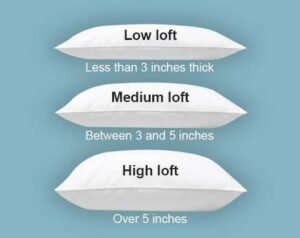
- Side sleepers: Require the highest loft — typically 10-14cm. The pillow must fill the gap between the mattress and the head to prevent lateral neck bend. Firm to medium-firm support is typically required.
- Back sleepers: Require a medium loft — typically 7-10cm. The head should be elevated sufficiently to maintain the cervical curve without flexing the neck forward.
- Stomach sleepers: Require the lowest loft — typically 5-7cm or even a dedicated stomach sleeper pillow. A standard pillow under the head of a stomach sleeper forces the neck into significant hyperextension, causing pain.
- Combination sleepers: Benefit from a medium loft with a responsive, adjustable fill that adapts as position changes throughout the night. Shredded memory foam and adjustable fill pillows are particularly suited to combination sleepers.
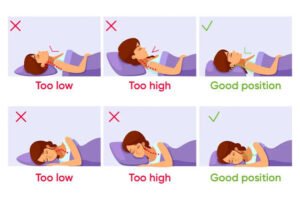
Choose the right pillow height to keep your neck and spine properly aligned while sleeping on your back or side.
Pillow Fill Materials in 2026
The pillow fill market in 2026 offers an extensive range of materials, each with specific properties that suit different sleep types and preferences:
- Memory foam (solid): Excellent pressure relief and consistent support. Does not flatten or lose shape over time. Runs warm. Best for those who sleep in a consistent position and want reliable, stable support.
- Shredded memory foam: Adjustable and moldable, combining the pressure-relieving properties of memory foam with the adaptability of a softer fill. Particularly suited to combination sleepers. Can be adjusted for individual loft preference.
- Latex (solid or shredded): Responsive, durable, naturally antimicrobial, and temperature-neutral. A natural latex pillow is one of the most durable pillow options available. Somewhat heavy.
- Down and feather: Soft, mouldable, and luxurious. Can be adjusted for loft by shifting the fill. Less supportive than foam or latex and requires regular fluffing. Best for back and stomach sleepers who prefer a soft feel.
- Buckwheat hull: A traditional Japanese fill that conforms precisely to the head and neck shape without rebounding — providing very firm, stable support that many people find uniquely comfortable. Heavy, noisy, and not everyone’s preference.
- Cooling gel pillows: Pillows with an integrated cooling gel layer or cover that absorbs and dissipates heat — among the most popular 2026 pillow innovations for hot sleepers.
Pillow Hygiene and Replacement
Pillows accumulate dead skin cells, dust mites, moisture, and fungal spores at a rate that makes regular replacement important for respiratory health and sleep quality. Most sleep hygienists recommend replacing pillows every one to two years, depending on fill type and care practices. Down and feather pillows can often be professionally cleaned and refluffed, extending their practical lifespan. Solid foam and latex pillows tend to be the most hygienically durable.
Between replacements, washing your pillow (where care instructions allow) every three to six months significantly reduces allergen accumulation. A quality pillow protector — a tightly woven, waterproof inner case that sits between the pillow and the pillowcase — is one of the simplest and most effective ways to extend pillow lifespan, maintain hygiene, and protect against the night sweats and moisture that accelerate degradation.

© 2026 bedroomstylereviews.com — All Rights Reserved
Affiliate Disclosure: We earn commission from qualifying Amazon purchases. All opinions are our own.

Dan is the founder and head content creator at Bedroom Style Reviews.
He has been working as a professional online product reviewer since 2015 and was inspired to start this website when he ended up sleeping on a memory foam mattress that was too soft and gave him backache.
Through in-depth research and analysis, Dan’s goal with this website is to help others avoid such pitfalls by creating the best online resource for helping you find your ideal mattress, bedding, and bedroom furniture.
Dan is a qualified NVQ Level 2 Fitness Instructor with 6 years’ experience helping clients improve their health through diet, exercise, and proper sleep hygiene.
He also holds several college and university-level qualifications in health sciences, psychology, mathematics, art, and digital media creation – which helps him to publish well researched and informative product reviews as well as articles on sleep, health, wellbeing, and home decor.
Dan also has direct personal experience with insomnia, anxiety, misophonia (hypersensitivity to sounds), and pain from both acute and long-standing sporting injuries – he enjoys writing insightful articles around these subjects to help fellow sufferers of such conditions.
Learn more about Dan here.